Courses


Showing posts with label camping. Show all posts

Thursday, February 12, 2015

Essentials Preparation for Outdoor Programme

Everybody loves outdoor activity, but not everybody able to organize a memorable outdoor programme. 
“In order to know where you’re going, you’re going to need to know where you want to end up.”
Who is going on the trip? What adventure activity will we choose? Where will the trip take
place? When will the trip be held? Why are we going on this trip? How do we do everything that
needs to be done in order to plan a FUN, safe and challenging backcountry trip that both
leaders and participants enjoy? These questions form the basis for trip planning. The following
is a series of more specific questions that, when answered, will help establish trip details.

Leadership Team
● Who’s interested? Who’s available?
● Relevant and recent backcountry experience?
● Recent and relevant experience working with the age group of the participants?
● Current qualifications?
● Who has worked (tripped) together before as leaders?
● What are their leadership styles? Communication styles?
● Night Owls vs. Early Birds; Grazers vs. Meal-timers
● Health status (allergies, medical conditions that might be problematic in the backcountry)
● DIY (Do it yourself) vs. TPSP (Third Party Service Provider)
Can we do this? Should we do this? What’s my comfort level?

Participants
● Who’s interested? Who’s available?
● Relevant and recent backcountry experience? Current qualifications?
● Are there prerequisites in order to be considered for the trip?
● Do they know each other?
● Have they camped or tripped with each other?
● What are their learning styles? Communication styles?
● Health status (allergies, medical conditions that could be problematic in the backcountry)
● How much training and orientation will they require to be successful on the trip?

Support (Home Contact Person) Team
● Who’s interested?
● Who’s available?
● Are they always available and what’s Plan B?
● Have they been oriented as Support Personnel?
● How well do I know them?
● How well do they know me and my competencies and experience?
● Communication styles?

The What
● What’s the primary means of transport?
● What do we need (gear, knowledge, skills, etc.)
● What is the activity? What are we doing while on the trip?
● What’s plan B?
● What documentation is necessary pre-trip (authorization and approval), during the trip
and debriefing/report post-trip? 

The Where
● Where will the trip start? Where will it finish?
● Where are you going to stay and camp on a day-by-day basis (trip/float plan)?
● Where are they ‘emergency exits’ along the way?
● Is where we’re going a controlled area or Crown Land (Cdn waters vs. intl waters)?
● What kind of climate is it? (marine, tundra, Canadian Shield, alpine)
● Are permits required? If so, what are the permit restrictions (size of group, numbers of
tents, cooking methods, etc.)?
● Are there fire restrictions or bans?

The When
● When are we going? For how long?
● What time of year is it?
● When do we need to leave home to be at the trailhead/put in on-time?
● Large group/small group (high vs. low and shoulder seasons by activity type)
● When do we need to acquire our permits?
● When do we need to communicate with our leadership team? With our home support
team? With our participants? With GGC? With the relevant parks/police authorities?

The Why
● Why do we want to do this trip (WIIFM – What’s In it for Me?)?
● Why does each of the participants want to do this trip?
● What are everyone’s trip expectations? (Are they only interested in how many kms. they
can log, or do they want to be able and stop and smell the roses along the way?)


The right to make a copy for personal use is part of most existing publishing agreements. This right is recognised as an important right for the author. Because the right is attached to the author and in most cases well defined, personal use won’t harm the publisher.

Thursday, February 5, 2015

Basic Nutrition Planning Tips


The following are basic tips for planning and organizing food for an adventure camp:
● Bring electrolyte powder or other juice crystals to add to the water
● Pre-measure portions by meal or per participant
● Bring extra stuff sacks or dry bags for food storage/food caching
● Pack food in multiple stuff sacks/dry bags rather than in one large bag and have each
group member carry a portion of the food
● Pack foods by meals or by days, whatever way of organizing works. Be organized and
make a list of who in the group is carrying which meals or which day of food
● Ensure snacks can be easily accessed (and not buried) while
hiking/biking/canoeing/kayaking, etc.
● Remove food from original packaging when possible to cut down on bulkiness, but keep
any necessary cooking instructions. Pack snacks in Ziploc bags for each day
● Choose meals that are easiest and take the least amount of time to prepare
● Always bring an extra meal or two on trips in case of an unexpected delay
● Don’t forget to drink lots of water – at the minimum 2 litres per day, and more when
exercising and in hot weather. If you are feeling thirsty, you are already dehydrated
● Bring small packages of condiments, peanut butter, honey and jam instead of large jars
● Packaging food in a food saver helps keep it fresher longer.


The right to make a copy for personal use is part of most existing publishing agreements. This right is recognised as an important right for the author. Because the right is attached to the author and in most cases well defined, personal use won’t harm the publisher.

Thursday, May 24, 2012

What is Hammock Camping?


One of the best ways to camp in the jungle is by using a hammock with a tarp over. The hammock keeps you off the ground, away from the wetness of the rain and creepy crawlies. Personally, it is by far the single type of shelter that is practical and jungle friendly.

The biggest challenge in using the conventional ground tents in the jungle is space. In the dense tropical jungle of Malaysia, finding a suitable ground space that is big and flat enough for a tent is almost impossible. Every inhabitant in the jungle is always competing for a piece of the ground. Plants grow on every patch of ground available and animals like ants and centipedes swarm the jungle floor for food at all time.

The hammock approach solves many of the challenges in trying to use a tent in the jungle. All that is needed are two good size tree, strong enough to hold your weight and spaced just right for the length of the hammock. The two trees act as the main ‘posts’ for the hammock and the flysheet that will later go over it. One can even setup this type of shelter at uneven ground and there is no need to chop or clear ground bush unnecessarily.

The 'guys' I brought for Fitness Adventure Challenge at Mount Ledang


My 'home'

The tired knotted back muscles relax extremely well sleeping in hammock curve, and after getting used to it, you will prefer it. You can elevate your feet above your body, it helps to reduce the swelling that sometimes happens overnight after a good hard day of hiking. Besides supporting you back, relaxing your body, and reducing foot swelling, there is the gentle rocking that can lull you to sleep, as well as the lack of mystery bumps like rocks and roots that you think are not there until you lay down to sleep like there is sleeping on the ground.

Hammocks are actually some of the lowest impact hiking systems out there. Instead of grooming a flat spot or compacting earth, a hammock keeps you above all that. Tree bark can be protected by either flat straps or by using a rope system that uses multiple wraps to distribute the load that keeps the rope from digging into the trees.

The benefits to hammock camping besides comfort and low impact are quite a few. The main ones for me are site selection, weight,  and flexibility.

The number of camp sites when you use a tent or tarp are limited to the places where you have flat ground, no pooling of water, clear of bush, clear of rocks and roots, and many other little things to make your sleep enjoyable as well as just supporting the structure. Many times you must either crowd into a limited number of spots with others, go to designated sites, create a site (increasing impact to environment), or take a less than perfect site. With a hammock, it's almost all good.

Enjoying every moment inside 'the home'

Feel asleep while the dinner served
When you have a hammock, your campsites are limited by imagination. All you need is a couple of trees the right distance apart. What is under you may not matter at all. I have personally can set the hammock and slept on the side of a mountain. There are things that make better camps than others, and some safety things to consider, but unless you are camping where there are no trees, then the hammock will increase your camp sites.

I also say weight because I select hammocks that are lightweight. There are some hammock models out there that weight a lot more, but that is your choice as what to carry. But the absolute lightest camping hammock with bug protection and rain fly is less than a pound, the absolute lightest tent that gives bug protection weighs twice that.

And as for flexibility, well my hammock serves as, chair, lounge, gear loft, solo tent, and of course - a hammock. A tent is always a tent.

The right to make a copy for personal use is part of most existing publishing agreements. This right is recognised as an important right for the author. Because the right is attached to the author and in most cases well defined, personal use won’t harm the publisher.

Wednesday, April 4, 2012

Nutrition for Outdoor

Just like a car needs fuel to drive, so does the human body need food and drink to build up the energy needed to walk. The provisions you take with you will largely depend on your own preferences, the duration of the hiking or outdoor trip, and if you will be able to replenish your supplies along the way. In general, good planning and precautions can prevent serious nutrition problems.

Selecting your Foods
Selecting what food to take with you will depend on your plans. On short hikes, you can pamper yourself by taking all kinds of snacks. The additional weight and volume might not be any serious factor, so why not. However, if you are going on multi-day hiking or camping with no sure places to replenish your provisions, careful choices will have to be made to make sure you can pack the necessary provisions. Thus, choosing your food becomes a challenging puzzle where nutritional value, volume, weight, and preparation method have to be taken into account.

Here are some tips when it comes to selecting your foods:
  • Dried or dehydrated foods: retain most of their nutritional value but since most of the water content has been removed, the foods are lighter in weight and smaller in volume. This makes dehydrated foods very popular in the outdoor community. Preparation is mostly very simple but will require water.
  • Canned Foods: are even easier to prepare but are both heavier and take up more space. Canned foods can be added to your selection if you want to build in some luxury treats.
  • Select a variation of foods that fulfill different nutritional needs. Variation in your food intake is very important especially on longer trips.


 planning & cooking a meals is a greatest & worthiest things to be mastered

Plan your Meals
You need to plan your food and fluid intake to make sure that you have enough to last for the duration of your hike. Planning your meals will make sure that you do not over indulge on day one, leaving you with nothing to eat on the third day.

Here are some guidelines in planning your meals:
  • Do not depend on other possible sources of food and bring everything you need to keep yourself well-fed during your hikes. Only if you are 100% sure that you will be able to restock should you take less with you.
  • If you are sure about re-supply points in your outdoor plans then anticipate on what provisions they can replenish.
  • Separate your meals in daily rations and package them separately. This will make it easier to determine how much you are allowed to eat to have enough for the full duration of your outdoor trip.
  • Package and label emergency rations. Labeling them as emergency rations will make you think twice before you use them as a snack!

Plan your Water Needs
Under normal conditions, the human body will be able to go without food for days. Without water, however, problems come a lot quicker.

Here are some guidelines in planning your water needs:
  • The absolute minimum is at least two liters per day. Take at least two liters with you even if you expect to find places where you can refill your water reserves.
  • Take about one liter for every two hours of hiking or other outdoor activities with the above mentioned two-liter minimum.
  • Under normal conditions, three to four liters per day should suffice.
  • Higher temperatures will increase the needed fluid intake.
  • Increased intensity will increase the needed fluid intake.
  • If you plan to spend nights outdoors, calculate extra water reserves for washing yourself and possibly rinsing cooking utensils.
  • Hydration Packs and water bladders have drinking tubes that make it easy to drink as you continue hiking. However, a possible danger is that you have no real way of checking your fluid reserves. So make sure to stop and check your bladder's content at regular intervals.
  • Make sure to bring water purification pills or devices even if you are bringing sufficient fluids for the trip. Water bottles and bladders can burst, leaving you with nothing. In these cases, water filters and purifiers can make the difference. If you have nothing to filter the water with but you do have your cooking gear then you can make most outdoor water potable by boiling it for at least 10 minutes.
Eat adequate amount of nutritious foods and drink lots of water to keep you energized on your outdoor trips. Proper selection of foods as well as enough planning and preparation of what to bring will ensure that you will not go hungry while do outdoor activities.

The right to make a copy for personal use is part of most existing publishing agreements. This right is recognised as an important right for the author. Because the right is attached to the author and in most cases well defined, personal use won’t harm the publisher.

Tuesday, March 20, 2012

Why Lightweight Backpacks?


As a backpacker, you can travel further and faster by packing lighter with lightweight backpacks. Many who have jumped on the lightweight bandwagon find they can wear light running shoes when carrying a 7 to 15 kilos backpack instead of the heavy-duty hiking boots they must wear when carrying the 20 kilos plus heavy-duty pack. This means that the backpacker can travel more kilometres in a shorter period of time and may even equate to a higher safety level. The comfort level is often greater because less weight means you will be less sore at the end of the day.

Traditional backpacking has a few disadvantages that are overcome by using lightweight backpacks. First,  when you backpack with heavy equipment, there is less freedom of movement. You can’t simply run off the  trail to see what is there because speeding up that much with a heavy pack would be terribly exhausting. If you put down the pack so you can run and see what is over the hill, you leave your equipment behind and have to backtrack to get it.


Carrying heavier gear means that you are more apt to be tired or even exhausted at the end of the day. More sore muscles will be evident and a greater likelihood for such things as blistered feet, knee injuries, sprained ankles or even back problems is possible. With too much weight on the back or the legs, the soreness can cause the camping and backpacking trip to be less fun than it would otherwise be.

Another disadvantage to the traditional heavy backpack is that packing time is often increased. Time must be spent to pack the backpack carefully for proper weight distribution. There is the additional time spent in taking the pack off and putting it on. If you want to quickly reach your adventuring destination, you may really appreciate the benefits of lightweight backpacks when it comes to ease of packing.

Another disadvantage to the traditional heavy pack is when you are caught in a storm. The heavy pack will  weight you down and keep your pace to a minimum as you seek shelter. Another problem may be if an injury  occurs, you will be weighed down by your pack as you head toward civilization to get help.

Basically, lightweight backpacks counteract all of the disadvantages of the heavier packs. You have much more freedom of movement because you don’t have a heavy pack weighing you down. You can zip off the trail any time you have a fancy to see something different and head across country without a trail until you meet up with your original trail. If you lose your balance, you are less likely to twist or sprain an ankle because the load on your back weighs less and won’t pull you down as quickly. This means that you won’t have as many aches and pains at the end of the day. The lightweight backpacks are easier on your legs and back and you won’t be as stiff. Getting to your destination faster may mean that you have more time to relax and work out any sore spots before you go to sleep so that you will have a more enjoyable experience.

If you needed to quickly get to civilization because your hiking companion was hurt, your light pack would not slow you down. Basically, using lightweight backpacks can be more comfortable because you will have quite a bit less equipment to haul around. You can find lightweight versions of all the camping gear you like and use, so you won’t have to sacrifice the gear you used for the weight limits of your pack.

You will have to be very organized and efficient if you plan to go lightweight backpacking, but it is very enjoyable.


The right to make a copy for personal use is part of most existing publishing agreements. This right is recognised as an important right for the author. Because the right is attached to the author and in most cases well defined, personal use won’t harm the publisher.

Monday, March 19, 2012

What & Why Hiking?

What is Hiking?

Encyclopædia Britannica from Encyclopædia Britannica Premium Service:


"Walking as a recreational activity and sport. Especially among those with sedentary occupations, hiking is a natural exercise that promotes physical fitness, is economical and convenient, and requires no special equipment. Because the hiker can walk as far as he wants, there is no physical strain unless he walks among hills or mountains."

In its most basic definition, Hiking is simply Walking for recreational purposes. A good summary is: “In Hiking, the Journey is more important than the Destination”. Hiking could be your average Sunday walk through the park or it could be a three-week expedition through the Andes mountain range. There are many words often used for Hiking depending on the Hiking conditions, hike length and terrain. Trekking, Backpacking, Bushwalking, Trailing and Mountaineering are just few of the terms that could be seen as Hiking Disciplines or Variations. In their most basic forms, these activities all boil down to walking. If you are able to put one foot in front of the other then you are able to walk and hike. At a more advanced level, Hiking could be seen as a starting point for learning Survival Skills, Camping, Mountaineering, Rock Climbing, Navigation Skills, and a variation of other outdoor techniques. A well-rounded and experienced hiker is an outdoor expert with the physical fitness level, knowledge, and mindset needed to deal with anything nature can throw on his/her trail. 

When people think about Hiking, they mostly think of nature, the great outdoors, a backpack, and a tent. For most people, Hiking is an escape back to nature and a great way to get a good workout while forgetting all about the day to day hassles of city life. On this website, we will look at Hiking in the broadest sense of the word and look at all the different variations of Hiking, the Hiking skills and techniques and Gear and Equipment. 


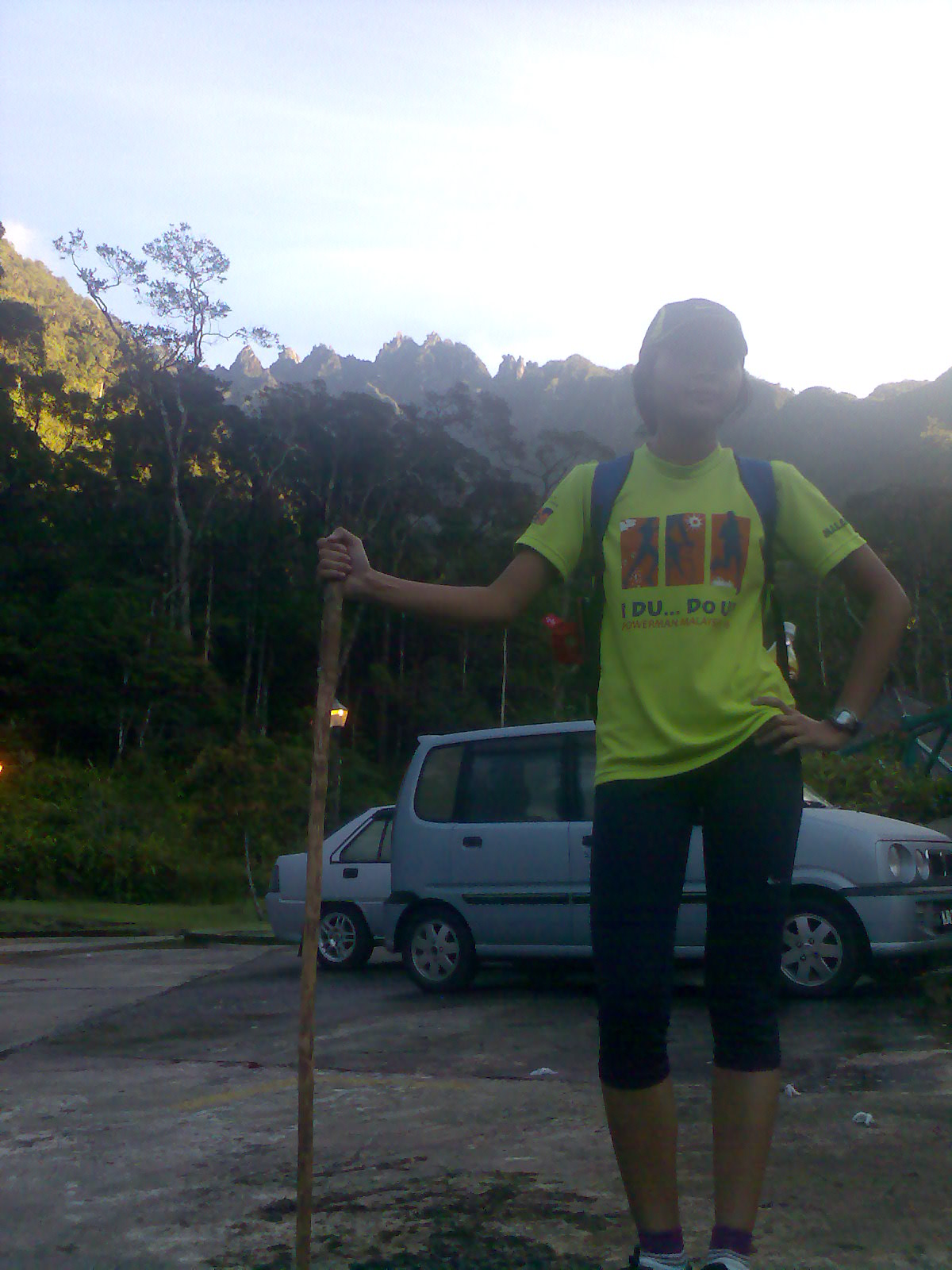
Hiking Mount Kinabalu is like Hiking + Altitude (Highest Mountain in South-East Asia)


Why We Hiking

Hiking is a recreational activity where we walk because we want to, not because we have to. The journey is more important than the destination. The reason we make this journey varies from person to person and from occasion to occasion. Most people like Hiking for one or more of the following reasons:
  • Hiking is a great body exercise which will greatly improve your overall physical condition. The natural walking motion provides you with a relatively low impact but effective workout. Furthermore, you are able to set the exact pace and length of your workout. Many people use walking as part of their Fitness routine.
  • Hiking is a great way to explore nature. Most people enjoy Hiking as it brings them back to nature. It can bring you to the most beautiful places on earth and into contact with amazing plants and wildlife. Beaches, deserts, woods, jungle forests, hills, and mountains all facilitate in different Hiking conditions, each with their own unique appeal.
  • Hiking is easy to start and it does not require high tech equipment. A solid pair of Hiking Boots, some basic (outdoor) clothing, and a small Hiking Backpack will be enough to get you started on basic day-hikes. The Walking Technique is something you possess from childhood and for basic Hiking, there is nothing else you need to learn.
  • Hiking is an activity that allows you to grow in your knowledge and skills as you progress. In its easiest form, Hiking is a very safe walk using clearly defined trails. In its extremer form, it would require Mountaineering, survival, hunting, and Navigation Skills. 
  • Hiking is the starting point of a whole range of other outdoor activities that require hiking. It is often a part of Rock Climbing, Mountaineering, Camping, Para Gliding, and a lot of other outdoor/mountainous activities. 
  • Hiking is a year round activity. In fact, being able to hike in different conditions is one of the activity’s most appealing and challenging factors. 
  • Hiking is a great way to get away from things and forget about the everyday stress in your life. It could be an experience you share with others or something that you do all alone. Many people take a walk to clear their heads or to think about issues. Hiking could be a way of relaxing or something that can test your own capabilities.
The right to make a copy for personal use is part of most existing publishing agreements. This right is recognised as an important right for the author. Because the right is attached to the author and in most cases well defined, personal use won’t harm the publisher.

Thursday, January 26, 2012

What is Stealth Camping?


Stealth Camping is the act of sleeping in non-conventional areas without trace or discovery. Either you in foot expedition, bicycle touring or motorbike adventure.

Though it may sound illegal, stealth camping, by definition, does not imply an illegal activity. Instead, stealth campers take advantage of  free or extremely low cost sleeping areas where other campers never think to stay. Proper stealth camping is an art and requires forethought, consideration of the property owner, and safety consciousness in order to keep it legal, safe, and comfortable. Stealth camping is legal in many areas, but not everywhere. Many locations have specific trespassing laws which limit those areas that you can legally stealth camp. Please use these links as a starting point in your research about the laws in your area

Stealth camping takes on many forms and there are very few confining definitions on what constitutes stealth camping.  If you have ever taken a long journey in your car and stopped at a rest stop or a fast food parking lot for an extended nap you have stealth camped without even knowing you were doing it.  Though sleeping in your car for a few hours at a Plus Highway R&R may not be considered hard core by the most experienced stealthers, car camping in public parking lots is one of the more sedate forms of stealth camping.

Dry run of stealth camping


If parking lots are too tame for you, don’t write off stealth camping as only for losers who would rather sleep in their cars than shell out money for a hotel bed and a hot shower. Remember, stealth camping takes on many forms. The more exciting forms of stealth camping will have you stringing a hammock & flysheet between two trees in a secluded wooded area on the outskirts of a big city or pitching a one-man bivy shelter within earshot of a westbound train or in a tucked away corner of a farmer’s pasture land.

The Unwritten Rules:
  • Never leave a trace. Do not break branches, or cut firewood. No campfires, no moving rocks, no altering the landscape. It might be okay to soften your bed with a bit of leaves, but you should spread them back out before you leave. It should not be evident that anyone was there. Leave NO trace. 
  • Try to leave the location cleaner than the way you found it. The creators of this site believe in removing a few pieces of litter from each location visited. This is our way of thanking the owner, and nature. 
  • You can try to plan ahead, but you will eventually be stuck in a rural area without a restroom. If you must empty your bowels in the woods, be sure to dig a hole, and then bury it. Usually you can plan around these things, but it will happen to everyone eventually. 
  • Trust your instincts. If the area looks like a location where you should ask permission, do so. We believe you should always ask the owner if the area has a clear and immediately obvious owner. 
  • If asked, be friendly and truthful about your adventure. Most people would rather share in your journey than cause you problems. Your actions will greatly impact how future adventurers are treated. Do not claim you were not trying to hide if your tent is camouflage. 
  • Make stealth camping one of several options. If there is a cheap or free campground nearby that equally suites your needs, it might be best to use it. This is a judgement call that is left to the reader. 
  • If confronted by the property owner, explain your position, and that you would happily pay a typical camping fee for use of the land. A friendly smile goes a long way; in a remote area the landowner will understand the limitations and challenges of your adventures. 
  • Stealth camping with groups often doesn't work. It works best when solo. When in a group we often let our guard down, talk, and are easier to see. If you are in a group, it is best to find a landowner who can give you permission to camp. 


Stealth Mode!


The right to make a copy for personal use is part of most existing publishing agreements. This right is recognised as an important right for the author. Because the right is attached to the author and in most cases well defined, personal use won’t harm the publisher.