Courses


Tuesday, April 17, 2012

Outdoor Recreation Course Level 1

This is another consequences from previous effort I put since 2007 to organize this course. Let's check it out as details below:

Course: Outdoor Recreation Course Level 1
Date: 20-22 April 2012
Venue: UTM Johor Bahru Campus
Fee: RM180 per person
Organizer: UTM in collaboration with Jabatan Belia & Sukan Johor

This course including:
  • camp craft
  • night jungle exploration
  • basic navigation
  • knots & abseiling set-up
  • wilderness first aid
  • water confident & maneuvers
  • kayak
  • lecture: Outdoor Program Management
This year I involved in this course as external consultant to helps the students tackling the tricky aspect of organizing the event. As I no more serve as government servant, this effort I considered as my public responsibility while without thinking about the payment get.

May the course will benefits all.

For more details & registration:
email me: miha5123@gmail.com
facebook: Blackopoulos Johor


Wednesday, April 4, 2012

Nutrition for Outdoor

Just like a car needs fuel to drive, so does the human body need food and drink to build up the energy needed to walk. The provisions you take with you will largely depend on your own preferences, the duration of the hiking or outdoor trip, and if you will be able to replenish your supplies along the way. In general, good planning and precautions can prevent serious nutrition problems.

Selecting your Foods
Selecting what food to take with you will depend on your plans. On short hikes, you can pamper yourself by taking all kinds of snacks. The additional weight and volume might not be any serious factor, so why not. However, if you are going on multi-day hiking or camping with no sure places to replenish your provisions, careful choices will have to be made to make sure you can pack the necessary provisions. Thus, choosing your food becomes a challenging puzzle where nutritional value, volume, weight, and preparation method have to be taken into account.

Here are some tips when it comes to selecting your foods:
  • Dried or dehydrated foods: retain most of their nutritional value but since most of the water content has been removed, the foods are lighter in weight and smaller in volume. This makes dehydrated foods very popular in the outdoor community. Preparation is mostly very simple but will require water.
  • Canned Foods: are even easier to prepare but are both heavier and take up more space. Canned foods can be added to your selection if you want to build in some luxury treats.
  • Select a variation of foods that fulfill different nutritional needs. Variation in your food intake is very important especially on longer trips.


 planning & cooking a meals is a greatest & worthiest things to be mastered

Plan your Meals
You need to plan your food and fluid intake to make sure that you have enough to last for the duration of your hike. Planning your meals will make sure that you do not over indulge on day one, leaving you with nothing to eat on the third day.

Here are some guidelines in planning your meals:
  • Do not depend on other possible sources of food and bring everything you need to keep yourself well-fed during your hikes. Only if you are 100% sure that you will be able to restock should you take less with you.
  • If you are sure about re-supply points in your outdoor plans then anticipate on what provisions they can replenish.
  • Separate your meals in daily rations and package them separately. This will make it easier to determine how much you are allowed to eat to have enough for the full duration of your outdoor trip.
  • Package and label emergency rations. Labeling them as emergency rations will make you think twice before you use them as a snack!

Plan your Water Needs
Under normal conditions, the human body will be able to go without food for days. Without water, however, problems come a lot quicker.

Here are some guidelines in planning your water needs:
  • The absolute minimum is at least two liters per day. Take at least two liters with you even if you expect to find places where you can refill your water reserves.
  • Take about one liter for every two hours of hiking or other outdoor activities with the above mentioned two-liter minimum.
  • Under normal conditions, three to four liters per day should suffice.
  • Higher temperatures will increase the needed fluid intake.
  • Increased intensity will increase the needed fluid intake.
  • If you plan to spend nights outdoors, calculate extra water reserves for washing yourself and possibly rinsing cooking utensils.
  • Hydration Packs and water bladders have drinking tubes that make it easy to drink as you continue hiking. However, a possible danger is that you have no real way of checking your fluid reserves. So make sure to stop and check your bladder's content at regular intervals.
  • Make sure to bring water purification pills or devices even if you are bringing sufficient fluids for the trip. Water bottles and bladders can burst, leaving you with nothing. In these cases, water filters and purifiers can make the difference. If you have nothing to filter the water with but you do have your cooking gear then you can make most outdoor water potable by boiling it for at least 10 minutes.
Eat adequate amount of nutritious foods and drink lots of water to keep you energized on your outdoor trips. Proper selection of foods as well as enough planning and preparation of what to bring will ensure that you will not go hungry while do outdoor activities.

The right to make a copy for personal use is part of most existing publishing agreements. This right is recognised as an important right for the author. Because the right is attached to the author and in most cases well defined, personal use won’t harm the publisher.

Tuesday, March 20, 2012

Why Lightweight Backpacks?


As a backpacker, you can travel further and faster by packing lighter with lightweight backpacks. Many who have jumped on the lightweight bandwagon find they can wear light running shoes when carrying a 7 to 15 kilos backpack instead of the heavy-duty hiking boots they must wear when carrying the 20 kilos plus heavy-duty pack. This means that the backpacker can travel more kilometres in a shorter period of time and may even equate to a higher safety level. The comfort level is often greater because less weight means you will be less sore at the end of the day.

Traditional backpacking has a few disadvantages that are overcome by using lightweight backpacks. First,  when you backpack with heavy equipment, there is less freedom of movement. You can’t simply run off the  trail to see what is there because speeding up that much with a heavy pack would be terribly exhausting. If you put down the pack so you can run and see what is over the hill, you leave your equipment behind and have to backtrack to get it.


Carrying heavier gear means that you are more apt to be tired or even exhausted at the end of the day. More sore muscles will be evident and a greater likelihood for such things as blistered feet, knee injuries, sprained ankles or even back problems is possible. With too much weight on the back or the legs, the soreness can cause the camping and backpacking trip to be less fun than it would otherwise be.

Another disadvantage to the traditional heavy backpack is that packing time is often increased. Time must be spent to pack the backpack carefully for proper weight distribution. There is the additional time spent in taking the pack off and putting it on. If you want to quickly reach your adventuring destination, you may really appreciate the benefits of lightweight backpacks when it comes to ease of packing.

Another disadvantage to the traditional heavy pack is when you are caught in a storm. The heavy pack will  weight you down and keep your pace to a minimum as you seek shelter. Another problem may be if an injury  occurs, you will be weighed down by your pack as you head toward civilization to get help.

Basically, lightweight backpacks counteract all of the disadvantages of the heavier packs. You have much more freedom of movement because you don’t have a heavy pack weighing you down. You can zip off the trail any time you have a fancy to see something different and head across country without a trail until you meet up with your original trail. If you lose your balance, you are less likely to twist or sprain an ankle because the load on your back weighs less and won’t pull you down as quickly. This means that you won’t have as many aches and pains at the end of the day. The lightweight backpacks are easier on your legs and back and you won’t be as stiff. Getting to your destination faster may mean that you have more time to relax and work out any sore spots before you go to sleep so that you will have a more enjoyable experience.

If you needed to quickly get to civilization because your hiking companion was hurt, your light pack would not slow you down. Basically, using lightweight backpacks can be more comfortable because you will have quite a bit less equipment to haul around. You can find lightweight versions of all the camping gear you like and use, so you won’t have to sacrifice the gear you used for the weight limits of your pack.

You will have to be very organized and efficient if you plan to go lightweight backpacking, but it is very enjoyable.


The right to make a copy for personal use is part of most existing publishing agreements. This right is recognised as an important right for the author. Because the right is attached to the author and in most cases well defined, personal use won’t harm the publisher.

Monday, March 19, 2012

What & Why Hiking?

What is Hiking?

Encyclopædia Britannica from Encyclopædia Britannica Premium Service:


"Walking as a recreational activity and sport. Especially among those with sedentary occupations, hiking is a natural exercise that promotes physical fitness, is economical and convenient, and requires no special equipment. Because the hiker can walk as far as he wants, there is no physical strain unless he walks among hills or mountains."

In its most basic definition, Hiking is simply Walking for recreational purposes. A good summary is: “In Hiking, the Journey is more important than the Destination”. Hiking could be your average Sunday walk through the park or it could be a three-week expedition through the Andes mountain range. There are many words often used for Hiking depending on the Hiking conditions, hike length and terrain. Trekking, Backpacking, Bushwalking, Trailing and Mountaineering are just few of the terms that could be seen as Hiking Disciplines or Variations. In their most basic forms, these activities all boil down to walking. If you are able to put one foot in front of the other then you are able to walk and hike. At a more advanced level, Hiking could be seen as a starting point for learning Survival Skills, Camping, Mountaineering, Rock Climbing, Navigation Skills, and a variation of other outdoor techniques. A well-rounded and experienced hiker is an outdoor expert with the physical fitness level, knowledge, and mindset needed to deal with anything nature can throw on his/her trail. 

When people think about Hiking, they mostly think of nature, the great outdoors, a backpack, and a tent. For most people, Hiking is an escape back to nature and a great way to get a good workout while forgetting all about the day to day hassles of city life. On this website, we will look at Hiking in the broadest sense of the word and look at all the different variations of Hiking, the Hiking skills and techniques and Gear and Equipment. 


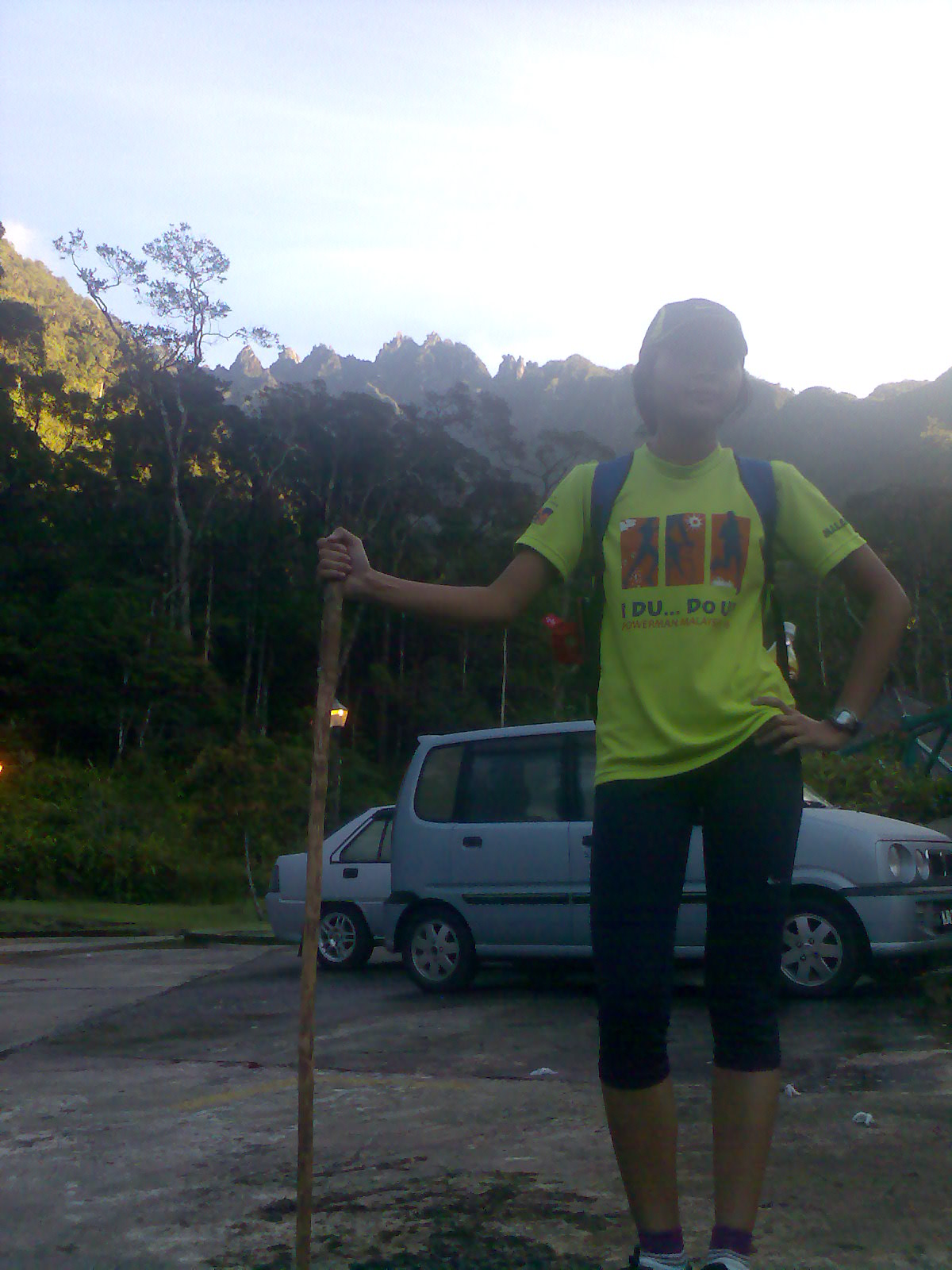
Hiking Mount Kinabalu is like Hiking + Altitude (Highest Mountain in South-East Asia)


Why We Hiking

Hiking is a recreational activity where we walk because we want to, not because we have to. The journey is more important than the destination. The reason we make this journey varies from person to person and from occasion to occasion. Most people like Hiking for one or more of the following reasons:
  • Hiking is a great body exercise which will greatly improve your overall physical condition. The natural walking motion provides you with a relatively low impact but effective workout. Furthermore, you are able to set the exact pace and length of your workout. Many people use walking as part of their Fitness routine.
  • Hiking is a great way to explore nature. Most people enjoy Hiking as it brings them back to nature. It can bring you to the most beautiful places on earth and into contact with amazing plants and wildlife. Beaches, deserts, woods, jungle forests, hills, and mountains all facilitate in different Hiking conditions, each with their own unique appeal.
  • Hiking is easy to start and it does not require high tech equipment. A solid pair of Hiking Boots, some basic (outdoor) clothing, and a small Hiking Backpack will be enough to get you started on basic day-hikes. The Walking Technique is something you possess from childhood and for basic Hiking, there is nothing else you need to learn.
  • Hiking is an activity that allows you to grow in your knowledge and skills as you progress. In its easiest form, Hiking is a very safe walk using clearly defined trails. In its extremer form, it would require Mountaineering, survival, hunting, and Navigation Skills. 
  • Hiking is the starting point of a whole range of other outdoor activities that require hiking. It is often a part of Rock Climbing, Mountaineering, Camping, Para Gliding, and a lot of other outdoor/mountainous activities. 
  • Hiking is a year round activity. In fact, being able to hike in different conditions is one of the activity’s most appealing and challenging factors. 
  • Hiking is a great way to get away from things and forget about the everyday stress in your life. It could be an experience you share with others or something that you do all alone. Many people take a walk to clear their heads or to think about issues. Hiking could be a way of relaxing or something that can test your own capabilities.
The right to make a copy for personal use is part of most existing publishing agreements. This right is recognised as an important right for the author. Because the right is attached to the author and in most cases well defined, personal use won’t harm the publisher.

Tuesday, February 28, 2012

What is the Benefits of Rock Climbing?

Rock climbing is seen as the most challenging adventure sport these days. More and more people are getting attracted towards this sport. The reason for this is because it allows people to challenge themselves, get some exercise and do this with the benefits of enjoying fresh and clean mountain air. Which other sports gives you so much and much more. 

The advantage of rock climbing is that it can be done both indoors and outdoors. For all the nature lovers, outdoor climbing is the way to go. And for those who do not like going out there and getting dirty, indoor climbing that so many gyms are offering these days is the solution. This advantage of it being an indoor and outdoor sport is what makes rock climbing a popular and year round sport. Remember climbing is not for the faint of heart, it is for those who do not mind taking some risks and overcoming their fears. 

Physical benefits of rock climbing

There are many benefits of climbing. One of the main reasons people take up climbing is because of its physical benefits. People are very health conscious and fitness is a big deal to them. So it gymnasiums get boring, then outdoor rock climbing is the best option for you. 

Most people think that rock climbing is a sport for men; this is not true at all. More and more women are taking up this sport to enjoy the outdoor and to challenge himself in a man's world.

Rock climbing involves a lot of stretching. This is because when you are on that rock or crag, you will have to stretch to reach out to that next hold to pull yourself up. Stretching is a great way to improve physical conditioning and flexibility. When you are indulging in climbing what you also get is the benefit of balancing and improved hand-leg coordination. 

Rock climbing helps you stay in shape. What it helps you do is

. Develop muscle tone
. Improves flexibility
. Ensures balance
. Improves coordination
. Enhances physical focus
. Helps burn calories

Remember that before you start climbing that you do some warm up exercises. Warming up is of utmost importance, without warm up you are prone to injury and harm. 


Mental benefits of Rock climbing

We all know that exercising makes you feel good about yourself. The reason for this is the happy hormones endorphins, which are released when you exercise. Hence the feel-good feeling. climbing is another such sport that makes you feel good about yourself. climbing is a challenging and difficult sport, when you have reached the top of the rock or crag, the feeling of accomplishment is unbeatable. 

People are social beings; we do things in pair or groups. climbing is also an activity that can be done in pair or groups. This feeling of being a social being and the fun and experience of climbing, helps relive stress. 

Rock climbing makes people confident and builds their self-esteem. If you can climb the difficult and almost impossible rock you never thought you could, you can do almost anything else in the world. This makes you feel capable and self-assured. It builds esteem and your confidence. 


Rock climbing also makes the climber more responsible and helps build trust. Responsibility comes with understanding the dangers and risks involved in climbing, and by respecting nature. The climber has to be responsible enough to take his own safety in his hands. 

Trust comes with trusting and literally putting your life and safety in the hands of the instructor initially and later by trusting the rope and basic climbing gear. Trust is a major part of climbing. 

Rock climbing can be fun and exciting if you go about it in the right way. Learn about the dangers of climbing and you should be fine as long as you do not do risky things. Remember to warm up as you would before any sport, as this will prevent you from harm and injury.


The right to make a copy for personal use is part of most existing publishing agreements. 
This right is recognised as an important right for the author. 
Because the right is attached to the author and in most cases well defined, personal use won’t harm the publisher.